The Karamojong cultural guardians are an indigenous ethnic group from northeastern Uganda, known for their traditional pastoralist lifestyle and adherence to cultural practices. Here’s a glimpse into their world:
he Karamojong people are an indigenous ethnic group from northeastern Uganda, known for their rich cultural heritage and traditional pastoralist lifestyle. Here are some interesting aspects of their culture:
- Cattle Herding: Cattle are central to Karamojong culture, symbolizing wealth and pride. They rely on livestock for sustenance, economic stability and cultural practices.
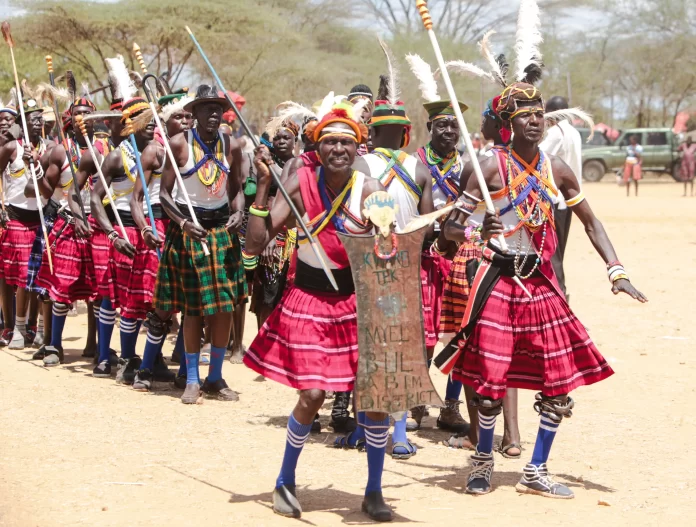
- Traditional Attire: The Karamojong are known for their colorful traditional attire, adorned with beads, jewelry and distinctive hairstyles.
- Initiation Ceremonies: Initiation into adulthood involves tests of endurance and participation in cultural rituals, marking important life stages.
- Community Structure: Elders hold revered positions, acting as decision-makers and custodians of wisdom. The community is structured around clans and age-sets.
- Music and Dance: Music and dance play a vital role in Karamojong cultural expression, showcasing unity, celebration and identity.
Who are the Karamojong Cultural Guardians?
- The Karamojong are part of the Nilotic ethnic group, sharing cultural roots with other pastoralist communities in East Africa.
- They’re renowned for their traditional dress, adorned with brightly colored garments, intricate beadwork, and jewelry.
- Their hairstyles are distinctive, with some men sculpting elaborate shapes.
Cultural Significance
- Cattle are central to Karamojong culture, symbolizing wealth, pride, and identity.
- Livestock plays a crucial role in their daily activities, structured around grazing patterns.
- Rituals and ceremonies mark important life stages, such as birth, initiation, marriage, and death.
Traditional Practices
- Initiation into adulthood traditionally involved tests of endurance and participation in cattle raiding, although this practice has diminished over time.
- Elders hold revered positions, acting as decision-makers and custodians of wisdom.
- Dance and music are vital to Karamojong cultural expression, showcasing unity, celebration, and identity.
Challenges and Conflicts
- The Karamojong have faced challenges, including marginalization, climate change, and occasional conflict.
- Joint security forces have been deployed to disarm the warriors, with reported numbers of warriors killed and guns recovered varying:
- 413 Karamojong warriors killed in 12 months, with 557 guns and 3,167 rounds of ammunition recovered.
- 465 warriors killed and 413 guns recovered in one year, according to a different report.
- The disarmament process has been met with resistance, and concerns have been raised about human rights abuses and torture.
Current Situation
- The security situation in Karamoja remains volatile, with ongoing operations to restore peace.
- Efforts are being made to engage the community and promote cooperation with security forces.
- Some locals have begun to work with authorities to apprehend armed warriors, but concerns about safety and protection persist.
The Karamojong people have a strong sense of community and cultural identity, shaped by their history, geography and traditions. Their culture is an important part of Uganda’s diverse heritage.
One response to “The Karamojong Cultural Guardians:”
jbb